…a Negative Wine Experience.

5 Glasses White

One of Sabie’s precious tourism patrons has picked up a negative experience in South African Wine from a well known Wine Cellar.

He purchased a 5 liter box of Stein Select from one of the bottle shops in Sabie. He was intending to enjoy some exciting Rugby Entertainment with friends while relaxing in front of the T.V.

Eventually he found that by the time they had reached about 50% down the box, each 200ml glass poured included at least a half teaspoon of undisolved sediment; the situation became worse the more wine that he decanted. On removal of the bag he noticed on the wine box that the filling date was November 2012. This is not the first time he has had this experience.

Grapes and Glasses

This is a case of nothing less than poor quality control, and misrepresentation by a manufacturer who in this instance is also blatantly admitting that they are filling their boxes with a blend of the dregs of the vintage while squeezing the last cent out of the offering. What is actually happening is that the Message that Cellar is conveying is that if you buy their box wine you are likely to find a nasty cheap wine which is in fact inferior, but that if you want to pay less you must be prepared to receive an inferior product, and accept what you get. A further problem arises from the fact that this kind of report could result in all South African box wines being treated as suspect.

This is unacceptable.

de Noir Wine

Many wine bibbers drink box wine in South Africa, as well as in other countries. Australia started the fashion of box wines as a means of reaching the man in the street and his family or friends who would also like to treat themselves to a less expensive and conveniently packaged good wine – especially at a picnic or beach party, or even at home. Box wine is so much easier to transport as well. It is also most convenient to decant a glass of wine direct from the box – no mess, no bulky bottles, no awkward disposal problems and no broken glass.

It should not be a means of fobbing off rubbish on unsuspecting patrons who are purchasing a product in good faith.

More than that, South African Wines exported overseas while striving to be acceptible to foreigners who have multiple choices in massive high quality supermarkets experience heavy competition from excellent wines produced in other countries. If this is what South African box wines amount to, they will be blown out of the export market. Foreigners drink box wine there too.

Wine at the Pool

We don’t even need to discuss the implications in the foreign tourist market travelling to South Africa whose number are only too keen to sample our South African wines. What a disappointment and subsequent disaster it will be to those who end up quaffing the dreggs of the vintage !

In my estimation this Cellar has broken all the Golden Rules in Marketing by compromising their Brand, their Message to consumers, their good Name that they have taken time to build up, as well as destroying the concept of good inexpensive wine being easily obtained in a convenient package throughout the wine industry.

Trips ZA Logo

Call our Dream Merchants at TRIPS ZA  for exciting History, Wildlife, Scenic and General Interest tours in the Panorama, Kruger, Lowveld regions or beyond on
013 764 1177.

Email us at johnt@tripsza.com

Posted in Sabie Newsletter | Leave a comment

Old Stone Joe on the N4 Highway

One of the routes to Sabie passes Old Stone Joe on the N4 Highway from Gauteng.

Joe Toff

Ever since I can remember, Old Stone Joe has been a feature on what was a narrow little dirt road, which is presently known as the N4 Highway between Machadodorp and Nelspruit. His domain is at the Patatas Nek pass on the right-hand side of the road looking down the magnificently beautiful Schoeman’s Kloof.

The pass’ name is a recollection of the wagoneers who stopped for an outspan at the top of the pass to rest, feed and water the oxen after climbing out of the Lowveld. They used to cook “patatas” for their meal while the animals were resting.

Stone Joe Daddy O !

Old Stone Joe is an enormous 2.5 meter high rock that was unearthed and loosened by road builders when they constructed the original main road in the latter part of the 1920’s. He was named Joe after the man Joe Barbas who helped unearth him and has the appearance of a sculptured man who must have been recognized and saved as such. He has an enormous paunch as he gazes down at one. He was used as a fence post at one stage.

I have been a traveler on the “N4” since 1944.

From 1944 to1947 my father used to convey us to the “farm” in the “Lowveld” every second weekend. He owned a little old 2nd hand 1938 two stroke, three cylinder wooden bodied Auto Union DKW, with a 650cc. motor. It possessed enormously huge owl-eye like headlights and a tall narrow grill. It used to carry the cook/bottle washer, my father, mother, me, my little baby sister and the dog, as well as all our luggage, and lots of “things” tied to the car roof…for the “farm”.

The little vehicle invariably suffered a lacerated tyre somewhere between Machadodorp and Nelspruit, which was blamed on the accursed “Bloody Machadodorp Shale”.

Slinky Joe

Both the dog and I used to suffer from serious motion sickness, with inevitable after effects. I won’t even discuss the type of journey we used to endure through rain, mud, heat and then of course the powder fine dust that crept in everywhere amidst on going curses; especially when another vehicle passed us going in the opposite direction. If it rained the windshield wiper was a little toy like gadget that smeared instead of wiping !

However, once we reached Old Joe, who sagely observed all passers-by while his stoic presence offered comfort like a lighthouse to stricken ships, (vehicles), we reckoned that we were in the “Lowveld” proper, and that our destination was reasonably close. We could then begin to contemplate the end of the journey. I used to ask my father when we would reach the “farm”, only to be told that it was not far, but “just around the corner”. They were the longest corners that I ever endured.

The story goes that one had to open and close “concertina” wire farm gates all the way from Nelspruit to Middelberg before the public road was proclamated.

Colgate Joe

The road was eventually upgraded to a comfortable new tarmac highway during the 1950’s by the P.C.Zaanen Company, who constructed the road all the way from Middelburg to Nelspruit. The new highway still went over Patatas Nek and followed more or less the original route. Old Stone Joe was retained as a mile-stone as he kept a dutiful eye over all travelers.

Joe Vuvuzela

After some years of just being a silhouetted fence post, Joe eventually took on a personality through the ingenuity of the late Major Claude Graham from White River, who kindly and enthusiastically used to guide groups of bored teenagers on expeditions and picnics during school holidays to decorate him. He has taken on many colourful personalities over the decades being decorated as a chef, toff, pirate, or waiter, etc. Now that the highway has been upgraded into a “super” highway, the services of Joe have been retained and he still does his duty as a sentinel landmark along the N4.

These days he has been placed on his own pedestal/cairn where tourists can stop for a picnic, or to have pictures taken. He has been adopted by various organizations who regularly commission Ghost the Cartoonist from Nelspruit to decorate him.Tourists can safely stop next to him.

To get to Sabie from the N4, turn left on to the R539 at Barclayvale. Follow the route past Sudwala to the R37. Turn left towards Lydenburg/Mashishing/Sabie and follow the sign-boards. Sabie is approximately 50km. from the N4.

By the way mind you…observe Joe carefully. He may just wink at friendly kids .

Trips ZA Logo

Call our Dream Merchants at TRIPS ZA for exciting History, Wildlife, Scenic, or General Interest tours in the Panorama, Kruger, Lowveld regions or beyond. Call us on
013 764 1177.

Email us at johnt@tripsza.com

Posted in Humour, Sabie Newsletter, Tourism | Leave a comment

The Chute

After alluvial gold became exhausted in the Pilgrim’s Rest and Sabie regions, new gold fields were discovered first at Kaapschehoop, then at Moodies and then eventually at Barberton in 1884.

Barberton Market Square

Barberton, was beginning to boom, as more reefs were discovered, and more fuel was added to the stories of wealth to be picked up under every rock and prospectors came from all corners of the globe.

Valleys and Mountains on the way to Barberton

There were three routes to Barberton. The one road left the Delagoa Bay/Lydenburg route near Pretoriuskop and proceeded through the Crocodile River, over Mara and Gould’s Salvation Valley to Barberton. The second route was linked to the Durban/Lydenburg route via Ladysmith, New Castle, Ingogo, Laing’s Nek, Volksrust over the Vaal River, Ermelo, Klipstapel (Breyton), Lake Chrissie, Badplaas, Jambila, through “The Chute”, to Barberton. Later the route was from Ngodwana via Kaapschehoop to Barberton. Two stage coach services were introduced to transport passengers to Barberton. They were the Gibson brothers’ Red Star Line and the other run by Geo. Heys and Co.

Progress was slow; the proverbial “pace of the ox”. Roads were bad, or in some places non-existent, while flooded rivers slowed up the journey in no small measure.

Ox Wagon River Crossing

Take for instance the account of crossing the Vaal River, between Volksrust and Lake Chrissie. First all the oxen were swum across the flooded river; while this was done, the wagons were unloaded and the bedboards fashioned into flat-bottomed ponts. The trek chains were then hooked logether, the end being coupled to the wagon, which was then pulled through under water, being brought to the surface on the opposite side of the river like a whale beaching. The women and children were then ferried across on the ponts as well as the goods that could not stand a wetting. The heavy gear was left on the wagon as this acted as ballast and stopped it from being carried away by the current. All this, of course, took a lot of time, but was great fun for any youngster who happened to be along, although most frustrating for the head of the family who was in a hurry to start digging up his fortune.

Although very picturesque, the journey from the highveld moving down the escarpment was one of the nightmares on the trek into the de Kaap Valley. A drop of about 650m had to be negotiated from the top of the escarpment to the floor of the valley below.

Before the actual drop was encountered there was a steep hill to be climbed. This was known as the Red Hill, south-west of Jambila, and it had a reputation as bad as its surface. It was a truly frightening experience. The hill was of red clay studded with boulders. The continual passage of wagons had made a cutting in one place of three metres deep; which of course, became a roaring torrent during heavy rain-storms which resulted in serious erosion adding to the depth of the cutting as well as exposing more boulders.

Heavy Trek

It was a common thing to have to pull a wagon up this steep incline with the mud up to the axles. Some of the heavily laden wagons, needed as many as 44 oxen inspanned to keep them moving. Imagine 44 oxen swaying all over the track, with sticky red mud covering everything; the heavy strangled breathing, and then the shouts of the drivers as they goaded the struggling but willing animals to even greater efforts. If an ox slipped and fell it was cut loose from the yoke and would be trampled underfoot by the other oxen and crushed to death by the heavily laden wagon, as there was no possibility of halting the wagon which could result in momentum being lost. Before the next wagon was pulled up, the track would be cleared of smashed wagons and injured or dead oxen, and the next saga would begin.

Once over the Red Hill, there was another steep hill to be descended. This was done by means of chaining the wheels with trek chains, while the sides of the wagon were lashed with thongs. Every spare hand then had to hold on to these thongs in order to keep the wagon from capsizing, and so the whole contraption rocketed down the hill to safety.

A few hours trek away was the Glenthorpe Chute. The Chute was about 5 kilometres long and the “Dreaded Chute” was the length of a wagon and a span of oxen. It had a very steep gradient and wagons sometimes careered downhill out of control. At the lower portion was “The Slide”, which was not as steep as it was dangerous. At the bottom of The Slide, on the opposite side of Gin Creek was Jenkinson’s Hotel, where the transport riders re-filled their gin bottles, (hence the name), before proceeding on their way to Barberton.

Outspan

Sometimes there were up to twenty wagons waiting to negotiate these awful obstacles, whilst at the bottom, meat from slaughtered oxen would be sold at 6d a pound. There were always plenty of dead oxen and mules strewn across the valley below. Vultures soared in the heavens, waiting for their morsel while keeping a watchful eye on the traffic below. Some of the rocks on the adjacent hills were white with the droppings of these birds that waxed fat on their pickings of misery. Today, vultures are indeed a rare sight in the Barberton area.

It used to take at least an hour of trekking to get away from the quite appaling stench of rotting carcasses that pervaded the air around the Chute and Slide environment.

The element of luck also played an enormous role – as a damaged wagon could result in a lengthy delay. One party from the Isle of Man decided to disassemble their wagon which they lowered into the valley by means of Block and Tackle. Their belongings were loaded on to oxen to carry down.

Some transporters used to salt the oxen’s necks with brine to try to avoid chafing. Others used to remove the wagon wheels with axles. Tree trunks or logs were used instead, allowing the transporters to use the wagon as a kind of huge sledge. There were also a number of babies born on trek too.

Material gleaned from
Golden Memories of Barberton by W.D.Curror
Lost Trails in the Mkonjwa Mountains by B. de Sousa
Other Sources
Picture of the Chute from
Photo History of Barberton 1884 – 1984, Page 57.  The book was compiled by Staff of the Barberton Museum and Hans Bornman.

Trips ZA Logo

Join us on exciting Jock of the Bushveld, history, wildlife, scenic and General Interest tours in the Panorama, Lowveld, Kruger and Bushveld regions or beyond
Call us at 013 764 1177

Email us at Johnt@tripsza.com

Posted in History | Leave a comment

Night drives through the Forests around Sabie

Baboon

Blue Duiker

Perceptions and so called facts about the alien forests around Sabie are not always correct, and can be somewhat misleading.

Apart from the gulleys, kloofs and vales that contain numbers of indigenous tree species, the remaining landscape originally consisted largely of grasslands.

Spotted Genet

African Wild Cat

According to one of the avid dedicated forester-birders of Sabie there was’nt much of anything left except grass by the time the gold miners began to destroy the landscape during the eighteen eighties and nineties with their picks and shovels. Wildlife had been hunted to near extinction by the middle part of the nineteenth century, for meat by biltong hunters and trophy hunters alike, apart from what the indigenous population trapped for their needs.

Red Duiker

Bush Baby

Apparently fires were the great destroyers of anything in their path, being driven by August winds at the beginning of spring. The indigenous forests in the gulleys and kloofs escaped these ravages, as fires could not be sustained in the kloofs without sufficient oxygen. Because of the fire hazard indigenous trees could not grow on the plains or mountain-sides. “Trek Boere” used to graze their sheep on these grass-plains during the winter months before the fires burnt off the rank excess growth of the previous summer.

Fires were started by lightning strikes during the early spring storms, or by farmers and indigenous people trying to stimulate fresh grazing. Indigenous people who smoked out bees while searching  for honey were also responsible.

Bos Vark/Bush Pig

Caracal

Gold miners who had been forced into deep level mining as the alluvial gold petered out, needed timber to support the addit rooves from collapsing. It was they who depleted the kloofs and gulleys of available indigenous timber. When this source eventually dried up, they started experimenting with alien hardwood species from Australia. Eventually various species of Eucalyptus Blue-Gum and Wattle grew prolifically with the high rainfall, and were found to be most suitable for “mine-props”, while Conifers from Mexico and other Central American sources were planted for other timber needs. It is said that about 60% of the grasslands and mountain-sides were planted to alien forests. Wetlands and river banks however have been largely cleared of alien species.

Pangolin

Serval

Adequate fire control measures were applied and the usual annual fire destruction was brought to a minimum through sustainable forestry practices. The indigenous tree species have since recovered substantially in the gulleys and kloofs.

There were a few bird species to speak of in the grasslands, but it was only after the alien forests were planted that wild life and many other forest bird species like Raptors, Nerina Trogon and Knysna Loerie, especially, started to proliferate. Today the wildlife around Sabie abounds in the forest areas, whereas birding has become a vital attraction with at least 270 species having been seen. It is speculated that there could be at least another 130 species to be found.

Leopard

Badger

One of the most exciting drives to take is a forest drive after dark. A surprising variety of game can be encountered on these drives from Caracal, Spotted Gennet, Serval, Blue and Red Duiker, Bush Pigs, Pangolin, Badger, Baboons, Vervet Monkeys, Bush-babies, to Bush Buck, and of course Leopard if one is fortunate enough. Only roads proclamated as Public Roads may be used.

These drives can be facilitated by our company TRIPS ZA. Email :  johnt@tripsza.com or call us at 013 764 1177 for a quotation.

Trips ZA Logo

Call us for exciting History, Wildlife, Scenic, or General Interest tours in the Panorama, Kruger or regions beyond, call our Dream Merchants at TRIPS ZA on
013 764 1177

Email us at johnt@tripsza.com

Posted in Sabie Newsletter, Tourism, Tours | Leave a comment

A Bright Green Tale…from Richard & Tina.

When Tina and I get to manage various different Lodges as “locums”, we certainly do have some very “interesting” challenges to contend with from time to time.

There are occasionally the more mundane problems…water pipes being broken, power failures, or TV’s, lights and geysers getting blown out by power surges when we are boiling over with a Lodge full of Guests ! Of course these would happen at the oddest of hours of the night, or over a long weekend when no Service Men are available to be called out.

We’ve even had a severe rain storm during the night – with water virtually washing half of a Lodge’s garden into a brand new swimming pool and almost destroying the one retaining wall of the pool.

There was also the comic-tragic instance, of a “lady” Guest triggering the outside perimeter alarm after 23.00hrs because she was despatched by a highly irate boyfriend to go and buy condoms from the all night Convenience Shop ! Essentials my dear, essentials !

Boomslang

However, I recently had a rather unusual experience with a very irate Guest, at a Lodge that is situated out on a farm.

While supervising the breakfast session one morning, the Gardener came to the door to ask me for a bunch of spare keys kept “somewhere” in the office. So off we went and started scratching around the big, but crammed office for the keys. After pulling open the top right-hand drawer of the desk I froze. There in the drawer lay a curled up, vivid green snake !

The helper who was assisting with the search shrieked out in panic, saying that the Owner must have left it there as a deterent to thieves ! With its bright green colour, one could have thought it to be a plastic toy snake. I had however opened that drawer just the day before for a staple remover, and knew it must be the real McCoy and most definitely not a “left-behind” toy. With my natural sense of insight into any devious behaviour, I immediately realised that it was indeed actually an unannounced Guest trying to sneak into a bit of free accommodation !

To cut a long story short and to not over-stretch the snake tail/tale, the Gardener was all ready to go and fetch a big stick to beat the Intruder to death, but I managed to ever so very gently remove the drawer out of the desk, then covered it completely with a flat cardboard box and carried it out into the nearby veld. It took quite a bit of firm coaxing with a long stick to try to dislodge a now very agitated snake out of its cosy sleeping quarters.

Boomslang

Then suddenly it sailed off and disappeared, into the nearby tall veld grass. The wily creature actually got away without paying for its overnight stay ! Whether they be Light Greens or Dark Greens, you do find Chancers like these in all the different strata of our South African Society today.

All of this just goes to prove the ancient Roman saying : there’s always something new Out of Africa !

Richard Allingham.

The Boom Slang or Tree Snake (Dispholidus typus )

The Boom Slang is a relatively small venomous snake which is also colour blind. The Boom Slang is known to be the only species in its genus. The name Boom Slang means “tree snake” directly translated from Afrikaans

Boomslang in a Tree

The Boom Slang is an oviparous species. The eggs have a relatively long (3 months on average) incubation period. Hatchlings are greyish with blue speckles. They attain their adult coloration after several years. Their diet includes chameleons and other arboreal lizards, frogs, and occasionally small mammals, birds and eggs from nesting birds, all of which they swallow whole. During cool weather they will hibernate for moderate periods, often curling up inside the enclosed nests of birds such as weavers.

Fangs of the Boomslang

Many members of the family Colubridae that are considered venomous are essentially harmless to humans, because they either have small venom glands, relatively weak venom, or an inefficient system for delivery of venom. However, the Boom Slang is a notable exception in that it has highly potent venom, which it delivers through large fangs that are located in the rear of the jaw. The venom of the boom slang is primarily a haemotoxin. It disables the blood clotting process and the victim may well die as a result of internal and external bleeding. Other signs and symptoms include: headache, nausea, sleepiness and mental disorders.

Boomslang Hunting

Because the venom is slow to act, symptoms may not be manifest until many hours after the bite. On the one hand, this provides time for procuring the serum, while on the other hand it may lead victims to underestimate the seriousness of the bite. Snakes of any species may sometimes fail to inject venom when they bite aptly named a “dry bite”, so after a few hours without any noticeable effects, victims of Boom slang bites may believe (wrongly) that their injury is not serious.

Adult boom slang has 1.6–8mg of venom. Various sources give figures ranging from 0.06-0.72mg/kg being sufficient to kill mice in 50% of cases, if the venom reaches a vein.

Boomslang Eye Missing Nothing

Despite all of this, the Boom Slang and other snakes are gentle creatures and will only attack when they are put in a situation they don’t want to be in. Most of the time the snake will see you before you see it and it will move away. Any snakes prerogative is to always avoid contact with humans as they are not by their nature, a conflict species. So next time you find a snake please don’t kill it, rather find some one that knows how to handle snakes safely and get the person to remove the snake for you.

Trips ZA Logo

For exciting History, Wildlife, Scenic and General Interest tours in the Panorama, Kruger, Lowveld regions or beyond call our Dream Merchants at TRIPS ZA on
013 764 1177

Email us at johnt@tripsza.com

Posted in Humour, Sabie Newsletter | Leave a comment

The Elusive African Black Leopard makes a dramatic and sudden appearance once again…

There have been so few sightings of African Black Leopard over the past decades that it has been concluded that they no longer inhabit the forests around Sabie or even exist for that matter.

At 06.30hrs on Tuesday morning 12th March, 2013 a large mature African Black Leopard darted across the R532 in front of a passing motorist. It was approximately 20 meters ahead of the vehicle, and was seen no more than 10km from Sabie.

The motorist was completely unaware of the fact that the African Black Leopard even existed.

This is the first positive identification of an African  Black Leopard made in the vicinity of the town of Sabie – ever.

Over the decades there have been sightings mentioned at various spots. There was one seen on the road to Pilgrim’s Rest many years back. Brian Jones saw one at Hartebeesvlakte in 1952. Another was seen in the vicinity of Badplaas but also many years back. It was virtually a case of the African Black Leopard being despatched into the files of legend, like so many other wild life species over the previous centuries.

According to predator specialists in the region Leopards have actually become man and domestic stock eaters, not from preference, but by virtue of the fact that their habitat has gradually but dramatically decreased through pressure on the environment because of so many various demographic challenges.
There have been a frequent number of other Leopard sightings over the past year or two in the Sabie region.

A black panther is typically a melanistic color variant of any of several species of larger cat. In the Americas, wild ‘black panthers’ may be black jaguars (Panthera onca), while in Asia and Africa, black leopards (Panthera pardus); in Asia, possibly the very rare black tigers (Panthera tigris). Smaller wild cats, like jaguarundi, may also be black.

Captive black panthers may be black jaguars, or more commonly Black Leopards. Melanism in the jaguar (Panthera onca) is conferred by a dominant allele, and in the leopard (Panthera pardus) by a recessive allele. Close examination of the color of these black cats will show that the typical markings are still present, but are hidden by the excess black pigment melanin, giving an effect similar to that of printed silk. This is called “ghost striping”. Melanistic and non-melanistic animals can be littermates. It is thought that melanism may confer a selective advantage under certain conditions since it is more common in regions of dense forest, where light levels are lower. Recent, preliminary studies also suggest that melanism might be linked to beneficial mutations in the immune system.

If you are interested in making reservations at a Game Lodge anywhere in Southern Africa, with mind blowing discounts, that will surprise you, contact us at 013 764 1177 or email us at johnt@tripsza.com

Trips ZA Logo

We can host you on exciting Forest Night Drives through the Sabie Forests.  Join us for a delicious Bush Feast as part of the package ! Call us
on 013 764 1177

email us at johnt@tripsza.com

Posted in Nature | 2 Comments

Some Wagoneering Dynamics encountered by Transport Riders.

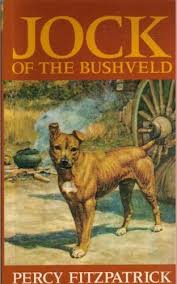
Jock of the Bushveld

The book of Jock of the Bushveld tells of so many experiences on Fitzpatrick’s journeys that in order to savour and digest the contents, one should actually read and re-read the book for those accounts.

We take so much for granted in our one stop quick fix quick solution lives that we can hardly consider what kind of hardships and vicissitudes that the transport riders encountered along the way.

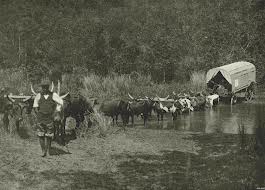
Lowveld Trek

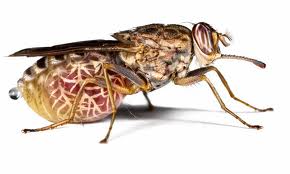
Tstse Fly

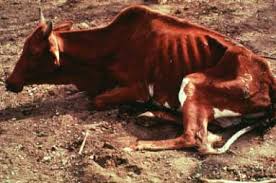
On the Bushveld trail between Lourenco Marques and the new gold-fields of Pilgrim’s Rest, transport riders encountered malaria, attacks from wild animals like lions or hyenas on their cattle and domestic animals like chickens, dogs or cats, nagana or sleeping sickness from tsetse fly bites, which affected both man and beast from which they seldom recovered, marauding aggressive tribesmen, excruciating heat and oppressively debilitating humid conditions, as well as unreliable helpers. The wiser operators avoided the Bushveld during the hot summer months.

However, they seem to have made a good living all the same, unless some disaster happened to overtake them like such as that which caught Fitzpatrick when he took a chance through the tsetse fly belt at Lows Creek, and lost everything.

Tsetse Bitten Beast

Some of the dynamics of actual trekking are quite astonishing. It took 18 head of oxen to pull a fully laden wagon. Another span of oxen had to be on standby as a relief team. All the animals had to be rested, fed and wartered at short intervals along the trip. Apparently there were 3000 wagons on the Durban toVolksrust/Lake Chrissie trail to the Barberton goldfields. This means that 108000 oxen were on the trail at any one time throughout the year.

What puzzles me is where the poor creatures found sufficient grazing to sustain themselves, because the carrying capacity of the veld is something like one mature beast of 500kg needs at least five hectares of good healthy grazing to sustain itself reasonably. They could have been made do with a lot less, but at a decided disadvantage to themselves. It means idealy that 108000 oxen needed 540000 hectares to sustain themselves on that trip. If two animals grazed five hectares and they were grazing no more than 750 meters from the wagons, along a distance of 1200km, the area being grazed was possibly only 270000 hectares.

Grazing Cattle

How on earth did they manage to sustain themselves and still be able to perform such a punishing task ? The obvious answer to the question in my mind, is that the number of wagons is badly exagerated. According to my reckoning there could have been no more than 1000 wagons on the trail at any time, or the animals would never have been able to cope with the trek. I have seen a picture of oxen standing in their yokes on the Barberton market square; they did indeed look very scrawny and undernourished to me.

Trips ZA Logo

Join us on exciting group Jock of the Bushveld, History, Scenic and General Interest tours of the Panorama, Escarpment, Kruger, Lowveld or Bushveld regions or beyond. Call us at TRIPS ZA
on 013 764 1177

Email us at johnt@tripsza.com


Posted in History | Leave a comment

Leopards in the mountains behind Sabie

Sightings of leopard are quite common in the mountains behind Sabie.

Cyclists competing in the various cycling events over the years have not infrequently come across leopard near the mountain trails, especially near Maritzbos. On one occasion they encountered a leopard in one of the cuttings there unperturbedly walking in the opposite direction. It made way as the cyclists determinedly carried on with their race.

Recently one of Sabie’s residents saw a leopeard casually sauntering down the road next to his fence in Engelhard Park. Apparently they’ve been seen in the forest behind Mount Anderson as well.

Timber contractors have seen leopard over time, and in fact reported a sighting of Black leopard at Maritzbos a number of years ago.

Recent reports on stock losses in the mountainous area behind Sabie towards Pilgrim’s Rest have surfaced, and concerned parties are sure it is Leopard. One farmer has lost 4 Stud Drakensberger calves in no less than 4 months and another farmer 3 calves in one month!

According to the farmers concerned, Leopard spoor has been found near the carcasses. One calf that managed to escape was partially mauled and badly scratched – fortunately the calf survived after it was treated by the farmer ! According to them the financial loss runs into many thousands of rand’s !

The ecological value of these predators cannot be over emphasized though, and they need to be conserved at all costs! However we must also be aware of the stock farmers plight and a win-win situation needs to be reached to protect the farmers interests !

Leopards prefer indigenous species to prey on, but where natural prey has been reduced, they could begin to prey on livestock. They have strong jaws and long canines and typically kill by biting the back of the neck but will also bite down on the throat. Their nails are sharp and retractable and multiple scratch marks may be seen, indicating where the front claws grabbed the prey to hold it down. They can drag their prey considerable distances and it has been recorded that they can drag a carcass (calf) up to 3 kilometres from the original killing site. They also hide the carcasses either under a bush, in a thicket, down a hole or up a tree(Smuts).

Feeding behaviour includes eating the haunches, shoulder and internal organs but the intestines are removed and left intact. Hair may also be removed on certain parts of the carcass and rib ends may be chewed and in smaller animals the thigh bones are also eaten leaving hardly any remains! Leopards return quite frequently to their kills and where hyena are present, they will carry the kill up a tree (Smuts). The following non-lethal methods can be used to control these predators:

Guardians: Anatolian Shepherds & Donkeys, Human, (also Llama or Ostrich-very effective). Protective Collars: King and Dead Stop – very effective. Management: Kraaling, Lambing/Calving Season, Lambing/Calving near homestead (Smuts)

Removal by using cages/live-traps is proven to very effective and successful. Poison controls are NOT recommended. Hunting dog packs are NOT recommended, as it is neither selective nor humane. Log-hold devices / gin traps should NOT be used (Smuts).

Of all the cat species, the leopard is the animal that evokes the most emotion and passion with ecologically minded activists. As such it, and the cheetah, have played an important role in the debate around developing ecologically sound, holistic non-lethal methods of control for predators !

Trips ZA Logo

Call our Dream Merchants at TRIPS ZA for exciting History, Wildlife, Scenic or General Interest tours in the Panorama, Kruger, Lowveld regions or beyond on
013 764 1177

Email us at johnt@tripsza.com

Posted in Nature | Leave a comment

An extremely rare African “Red” Leopard was recently killed on the road near Lydenburg

An extremely rare African “Red” Leopard was recently killed on the road near Lydenburg. The fully-grown female apparently carried a very rare genetic mutation called erythrism, which refers to the unusual reddish pigmentation of its fur and skin..

Red Leopard

Mr Egbert Hiemstra, a farmer in the district, was called by Mr Pieter van Niekerk who saw the leopard lying in the road. Van Niekerk removed the carcass and Hiemstra went to collect it. “I could see the colour was a bit weird. We knew there were variants but weren’t aware of the fact that this was such a rare case.” He said several cars had stopped when he arrived and bystanders were already discussing what parts of it they wanted. “This animal’s black market price is very high. I basically only rescued the carcass and phoned the parks agency to come and collect it.”

Hiemstra said they occasionally found leopard prints on the farm but they hadn’t seen one recently.

According to Mr Gerrie Camacho, predator expert of the Mpumalanga Tourism and Parks Agency (MTPA), this particular genetic mutation is extraordinary. “This appearance is even scarcer than the African Black Leopard that was spotted in the mountains behind Sabie in 1952. The first account of the African “Red Leopard” was made in 2002 when the late Mr Gert Stolz told me about a sighting of what he called an “orange” leopard. “Although we have had various cameras installed to observe them in the region, there has never been a sighting of an erythristic leopard. This is the first time I have actually seen one.”

According to Camacho, there is a seemingly healthy population of normal-coloured leopard and this now indicates the possibility of having three different genetic mutations for colour in this area. Camacho said there could be several explanations for it. “What is very rare in this case is both factors contributing to the condition, the absence of black and the abundance of red, are visible. This could not be linked to albinism which is a congenital disorder characterised by the complete or partial absence of pigment in the skin, hair and eyes due to the absence of melanin.” The hide could not be saved as rigor mortis had already set in when Camacho began the examination.

After the animal’s body was examined by Camacho it was discovered that it had been suckling until about a month ago. “If the litter survived, the cubs could be about four to six months old as leopards suckle for three months. This could also have been its second litter in its lifespan. The cat was a fully grown female that weighed in at 48kg and according to the teeth and ears, was five or six years old.” Upon closer inspection one could see the definite absence of black pigment. The nose, back of ears, gums and paws were predominantly pink.

Should there be any sightings of leopard cubs roaming near the area where the feline was killed, residents are urged to contact Tourism Marketer for assistance on 013 764 1177.

The only other reported sighting of such erythrism in a leopard was in April last year in Madikwe Reserve on the Botswana border.

Trips ZA Logo

Call our Dream Merchants for exciting Wildlife, History, Scenic or General Interest tours in the Panorama, Kruger, Lowveld regions or beyond on
013 764 1177

Email us at johnt@tripsza.com

Posted in Nature | Leave a comment

Provincial and Municipal Traffic Officials Extorting Money From both Foreign and Local Tourists alike

It has come to our notice on a number of occasions that both Municipal and Provincial Traffic Officers are demanding “spot”money from International and Local tourists alike along our highways and byways. These culprits are demanding “spot” money on reduced fines with impunity from terrified or corrupt road users that are only too pleased to avoid any further confrontation or inconvenience, whether they have committed an offense or not.

This  situation is untenable.

Nowhere in a first world country is this type of malpractice tolerated whatsoever, and if this type of activity is allowed to flourish in this country, it will cause massive tourism brand compromisation with a never ending further distrust of our Law and Order capability throughout South Africa. Even if we manage to stamp out this practice, the  kind of damage that will have been caused will take years of effort to rectify -  if we are ever trusted again. Further it could also  lead to  anarchy amongst others  with criminal tendencies, if they see how easy it is to squeeze money out of travellers in South Africa on whatever pretext.

In fact, we managed to have two of the offenders arrested by acting timeously. Unfortunately the victims declined to press charges because of logistical complications, and that they had in any case received their money back. The one offender was pleaded for by his Superior, in front of the Local Magistrate, not to have a criminal case opened, but rather to have an internal disciplinary hearing whereby the guilty Officer would be relieved of his post. Apparently all Officers are on the take (from what their Superior had to say), and that if appropriate action is taken, it could result in the whole contingent being fired eventually, and then there would be nobody to offer any kind of service at all. It makes me think that their Superior was perhaps in on the deal !

The more guilty parties are culprits who have broken the Law, and then bribe the Officers involved to lower the fine and take the money for themselves. After all- who would be any the wiser without a paper-trail ? This is happening on a large scale.

The point is – corruption is rife at all levels in South Africa today. At the rate things are going, it could eventually totally destroy any vestige of the fabric of a civilized moral society.

In the First World this kind of rot is not tolerated. However, with the general breakdown of moral standards and lack of basic discipline on so many fronts everywhere, it is not surprising that corruption is making itself felt, and things could get worse.

Travellers must under no circumstances allow Officers of the Law to intimidate them. If there is any hint of corruption they must refuse to pay any form of payment to an Officer because it against the Law for him to accept payment. The traveller must then insist on being able to proceed to a Police Station or Magistrate’s Court, in convoy with the Officer involved, and to put their case to the relevant Authority or Station Commander.

Posted in Sabie Newsletter | 1 Comment