
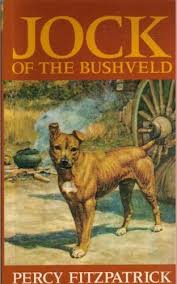
Jock of the Bushveld
The book of Jock of the Bushveld tells of so many experiences on Fitzpatrick’s journeys that in order to savour and digest the contents, one should actually read and re-read the book for those accounts.
We take so much for granted in our one stop quick fix quick solution lives that we can hardly consider what kind of hardships and vicissitudes that the transport riders encountered along the way.
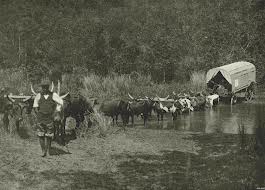
Lowveld Trek
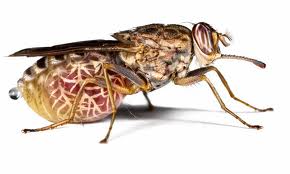
Tstse Fly
On the Bushveld trail between Lourenco Marques and the new gold-fields of Pilgrim’s Rest, transport riders encountered malaria, attacks from wild animals like lions or hyenas on their cattle and domestic animals like chickens, dogs or cats, nagana or sleeping sickness from tsetse fly bites, which affected both man and beast from which they seldom recovered, marauding aggressive tribesmen, excruciating heat and oppressively debilitating humid conditions, as well as unreliable helpers. The wiser operators avoided the Bushveld during the hot summer months.
However, they seem to have made a good living all the same, unless some disaster happened to overtake them like such as that which caught Fitzpatrick when he took a chance through the tsetse fly belt at Lows Creek, and lost everything.
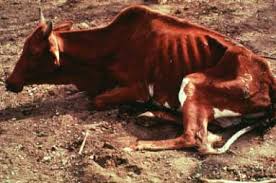
Tsetse Bitten Beast
Some of the dynamics of actual trekking are quite astonishing. It took 18 head of oxen to pull a fully laden wagon. Another span of oxen had to be on standby as a relief team. All the animals had to be rested, fed and wartered at short intervals along the trip. Apparently there were 3000 wagons on the Durban toVolksrust/Lake Chrissie trail to the Barberton goldfields. This means that 108000 oxen were on the trail at any one time throughout the year.
What puzzles me is where the poor creatures found sufficient grazing to sustain themselves, because the carrying capacity of the veld is something like one mature beast of 500kg needs at least five hectares of good healthy grazing to sustain itself reasonably. They could have been made do with a lot less, but at a decided disadvantage to themselves. It means idealy that 108000 oxen needed 540000 hectares to sustain themselves on that trip. If two animals grazed five hectares and they were grazing no more than 750 meters from the wagons, along a distance of 1200km, the area being grazed was possibly only 270000 hectares.
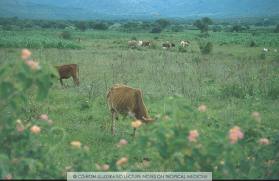
Grazing Cattle
How on earth did they manage to sustain themselves and still be able to perform such a punishing task ? The obvious answer to the question in my mind, is that the number of wagons is badly exagerated. According to my reckoning there could have been no more than 1000 wagons on the trail at any time, or the animals would never have been able to cope with the trek. I have seen a picture of oxen standing in their yokes on the Barberton market square; they did indeed look very scrawny and undernourished to me.

Trips ZA Logo
Join us on exciting group Jock of the Bushveld, History, Scenic and General Interest tours of the Panorama, Escarpment, Kruger, Lowveld or Bushveld regions or beyond. Call us at TRIPS ZA
on 013 764 1177
Email us at johnt@tripsza.com