A study of the different routes that Fitzpatrick and Jock of the bushveld used on the various trails reveals typical aspects of the type of life that was endured by the transport riders.
An edited action version of the the book “Jock of the Bushveld” can be purchased from us at R135.00 plus postage R44.00 within Southern Africa, = R180.00 ($18.00.00 US).
One of the passes that had to be negotiated between the Lowveld and Sabie, was the pass between the present Witklip Dam, and Spitzkop. Fitzpatrick describes it in the Jock book chapter on the Berg.
He says that the Drakensberg stood before them like an impassable barrier, and that the last day of each trip back from the Bushveld was always a day of trial and hardwork for both man and beast. He says further that it was on the Drakensberg that he saw what a really first class man could do.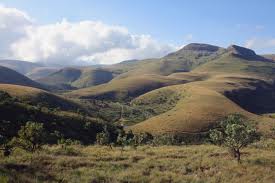
If one stands on the edge of the Berg at more or less the point directly above the Witklip Dam and beholds the unfolding beauty and the magnificent view of the valley below, one can see the contour lines which the wagon trails followed from the vicinity of Klipkopje Dam to the bottom of the Berg. It is quite obvious that any attempt at crossing the Berg at that spot, would have been a rather difficult task.
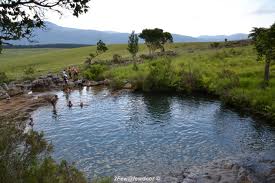
 The book says that below the Berg was the last Outspan where the animals were rested, fed and watered, and where the loads were halved, the teams double spanned, and where they pulled themselves together for the final climb.
To those that did not know, there wasn’t much difference between spans of oxen; the driving of them seemed a matter of brute strength and lung. One span looked very much like another. The wierd unearthly calls of the drivers, the cracks – like rifle shots – of the long lashes, and the hum and thud of the more cruel doubled whip, seem to be all that was needed; but that is not so. Heart, and training in the cattle, as well as skill and judgement in the driver are also needed, for the Berg is a searching test of both man and beast.
 Some days were even more of a trial than others, in that portions of loads that were dumped off to ease the pull, dotted the roadside; tangles of disordered maddened spans blocked the way; and fragments of skeys, yokes, “riems” (leather thongs), and broken “disselbooms” (the shaft connected to the wagon next to which the draught oxen were inspanned), told a tale of desperation, frustration, and trouble.
Fitzpatrick commented further on one specific occasion; “Next came “old” Charlie Roberts with his two wagons. He was old to us as he was nearly fifty. He was also stout and in poor health. We buried him in Pilgrim’s Rest a week later”.
Charlie walked slowly up and down the pass to see if he could perhaps get through past the stuck wagons. He got started a little later, making three loads of his two, and went on with single spans of eighteen oxen each, because the other wagons stuck in various places along the climb did not allow him space to work double spans.
To Fitzpatrick’s team it would have been madness to try to attempt the climb with only eighteen oxen inspanned, but when they were already half way up the pass they saw Charlie coming along steadily without any fuss at all.
He had no second driver to help him, and he did no shouting at all. He walked along beside the span, playing the long whip lightly about as he gave the word to go, or called quietly to each individual ox by name, but he did not touch them.
Fitzpatrick’s team was held up with a break in the gear, and were blocking the road way almost completely by the time Charlie reached them. Any one else would have waited, but Charlie pulled out into the side track on the slope below, to pass them. Even the best could have come to grief trying to pass a stuck wagon, but Charlie didn’t turn a hair. He went steadily on, while giving a brisker call, and touching up his oxen here and there with light flicks. The tracks he took were merely scorings made by wagons coming down the mountain. It was so steep and rough there that a pull of more than ten meters between the spells for breaths was all one could hope for; and many were thankfull to have done much less.
There was a hotel at the top of the pass named Nolan’s Hotel. The transporters called it Nolan’s Lekkerlach Hotel. Apparently the wagons were outspanned again, to allow the trek oxen to rest once more before the comparatively easy trek down to Sabie.

Sabie Pass
Another version of the word “Lekkerlach”, is that the farm on which Nolan’s stood was called “Lekkerlach”.
Fitzpatrick comments on the fact that there were usually many wagons waiting to go up the pass most days which points to the fact that travelers must have stayed over when they reached the top of the pass. There must have been plenty of music, booze, laughter, partying, card playing, and carousing. What a party !
We have rcently learned that there was also a race course in the vicinity of Nolan’s Hotel. Some enthusiasts are fossickong about to find whatever can be unearthed nearby.
We have never been able to locate the ruins of Nolan’s hotel An interesting part of “trekking”, is the routine followed by the transporters on a daily basis. The following is a short account from a wagoneer’s diary.
21/11/1885 Stopped all day, (let cattle graze, rest, and get water.)
22/11 /1885 Inspan. 03.00hrs Trek. Dark, heavy clouds, little light.(Traveling at night is easier on the oxen. Not good to trek in rain, as the harness chafes and hurts oxen. Work in heat exhausts the animals. Depending on circumstances, the trek time lasts anything from only 2 hours to no more than 6 hours on average, and sometimes covers only a few kms.) Outspan 08.30hrs. Went fishing, caught 3 small ones. Helped another wagoneer stuck in stream. Big rocks. Bent axle. Inspan 16.00hrs Trek Outspan 18.00hrs. In fog. Saw a few antelope.
23/11/1885 Inspan 03.00hrs. Trek. Stuck in another spruit. Two spans to pull out. Breakfast. More rain. Stopped. Bought bread, black and sour. Rain cleared again 14.00hrs. Inspan 15.00hrs. Trek. Shot buck for the pot. Outspan18.00hrs. Tea time. Facing hills. All quartz and rocks. Wild flowers.
24/11/1885 Inspan 03.00hrs. Trek. Roads rough, stony, hard trek. Outspan 06.00hrs. Inspan 09.00hrs. Road all quartz. Outspan12.00hrs. Dinner. Thunder showers. Doe for the pot. Stayed over.
25/11/1885 Inspan15.00hrs. Trek. Roads a little better. Outspan 01.00hrs. At daylight scouted for mushrooms. I have a touch of dysentery. Sheep farmer passed with a lot of Sheep. Inspan11.00hrs. Cool day. Trek. Came to a river, crossed with 2 spans. Rapid current. 5 feet (1.50m.) deep. Had a swim. Many wagons crossed the river today. Outspan 15.00hrs.
26/11/1885 Inspan 03.00hrs. Trek. Outspan 07.00hrs. in Barberton. Breakfast. Walked down town. Quite busy. Many fine stores. We bought the following:
Refreshments. 2 shillings (0.20 cents.)
Bread sixpence (0.05 cents.)
Native 1 shilling (0.10 cents.)
Buns sixpence (0.05 cents.)
Lobster 1 shilling and 9 pence (0.19 cents.)
Unfortunately, one cannot actually reach the exact spot where the wagons crossed the berg before trekking into Sabie. The actual route followed by wagons from Sabie to Pilgrims Rest and Macmac is however fully documented.
The original path used by wagons has been more or less located by previous dedicated adventurers of the original Diggers and Transportriders Association in conjunction with Cecily Nevin the daughter of Fitzpatrick who made work of having waymarks placed wherever the original “Jock of the Bushveld” routes crossed the existing main roads covering the region.
Self Drive and guided tours can be embarked on which enable independent and group tourists to experience some of the adventure that the wagoneers of the earlier days must have had.
More information can be obtained on various facits of this history by leaving comments and requests on the Sabie Blog, or emailing us for all your accommodation requirements.

Trips ZA Logo
Talk to our Dream Merchants about a stunning Jock of the Bushveld, other exciting History tours, Nature, Scenic or General Interest tours through the Escarpment, Lowveld or Bushveld.
Reach us at 013 764 1177
Email us at johnt@tripsza.com

 If you’re planning a trip, it’s very tempting to try to plan the whole thing yourself. After all, you have access to online travel websites that provide you with what seems like all the information you could possibly need, and they promise great prices as well.
  Before you dive in, keep in mind that working with a Tourism Agent, Broker or Destination Marketer, can not only lift your trip from good to great, but can also save you money, get you perks you would never know about on your own, and can even help you out of a jam if something unforeseen happens. Here are the five top reasons why you should choose to use a tourism broker, destination marketer or travel agent:
 Your Tourism Agent has complete knowledge regarding paperwork, immunizations and other documentation that may be required, and will put everything together for you in a simple package with step-by-step instructions. Plus, working with a Tourism Agent means you only have one bill to pay.
 So give them a call, give them the basic outline of what you have in mind, and sit back and let them plan a fabulous trip for you!
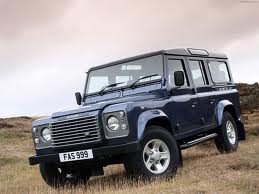 In the Jan.2011 issue of South African Country Life there is an interesting “crit” on the new “Landy” Defender 110.
 Klippies and
  Coke, cheap sweet white plonk, and of course – beer. A “potjie” of delicious curry, stew or oxtail usually simmered close by during the winter months, as we determinedly mellowed to the occasion. However we did actually enjoy one another too.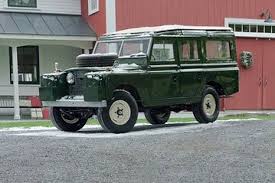
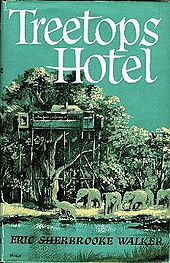 He was selected to escort Princess Margaret of Great Britain during a visit with her sister Princess Elizabeth to the famous Treetops Hotel in Kenya during the early 50’s. He was sent with his company to attend the Coronation of Queen Elizabeth in England, as a representative of the Kenya African Rifles.
 He was of course a most entertaining raconteur, dressed in a sarong (and nothing else) around his middle, with a floppy hat on his head….Tourists simply loved to party with him.
 By this time the ice, the beers, and the Coke were all consumed, and we were wondering what to do next.
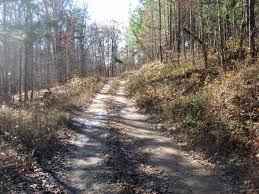 Eventually we managed to hitch the “old lady” to the Unimog and started towing. What amused me was that the “Landy” could not even free-wheel down the steepest incline – the handbrake off I promise – and had to be towed the whole way home.
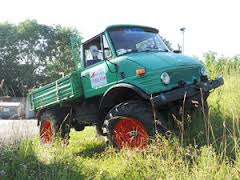 He was of course the perfect study of the stiff upper lip Colonial Duke who could never be seen to flinch even in the face of the greatest adversity, as he studiously guided the “old lady” home.
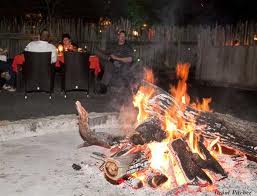 A group of revelers was sitting on a bench near the boma fire, when the legs suddenly collapsed, and the whole gang landed on their backs in the grass awash with their drinks !


